
Good morning.
It’s not always about the money.
As much as clients appreciate low fees, their guiding principles when searching for an advisor go far beyond price. Nearly two-thirds of consumers holding at least $20,000 in investable assets ranked trust and reputation as their top consideration when deciding on a wealth management provider, according to a TransUnion survey. Just under half prioritized fees.
“As digital engagement becomes the norm, trust is no longer an intangible brand attribute,” says Joshua Turnbull, SVP of financial services at TransUnion. “It is a measurable business asset that can influence acquisition, retention, and long-term growth.”
Fees may get clients’ attention, but trust gets their business.
New RIAs Face a Long and Winding Road to Profitability
And unlike another legendary Beatles song, advisors launching their solo careers probably shouldn’t just let it be. If you are breaking away from a wirehouse or broker-dealer, for instance, you should be prepared for 30 to 50% of the clients you counted on to delay, downsize, or even not follow you at all.
Our latest guide, RIA Launch Reality Check, flags down the 10 things that can catch new RIA founders off guard, from an insurer that can deny you coverage outright to a marketing rule that can trigger a deficiency finding in your first SEC exam.
This Week’s Highlights
Upvoted Into S&P 500, Is Reddit Getting Ratioed?
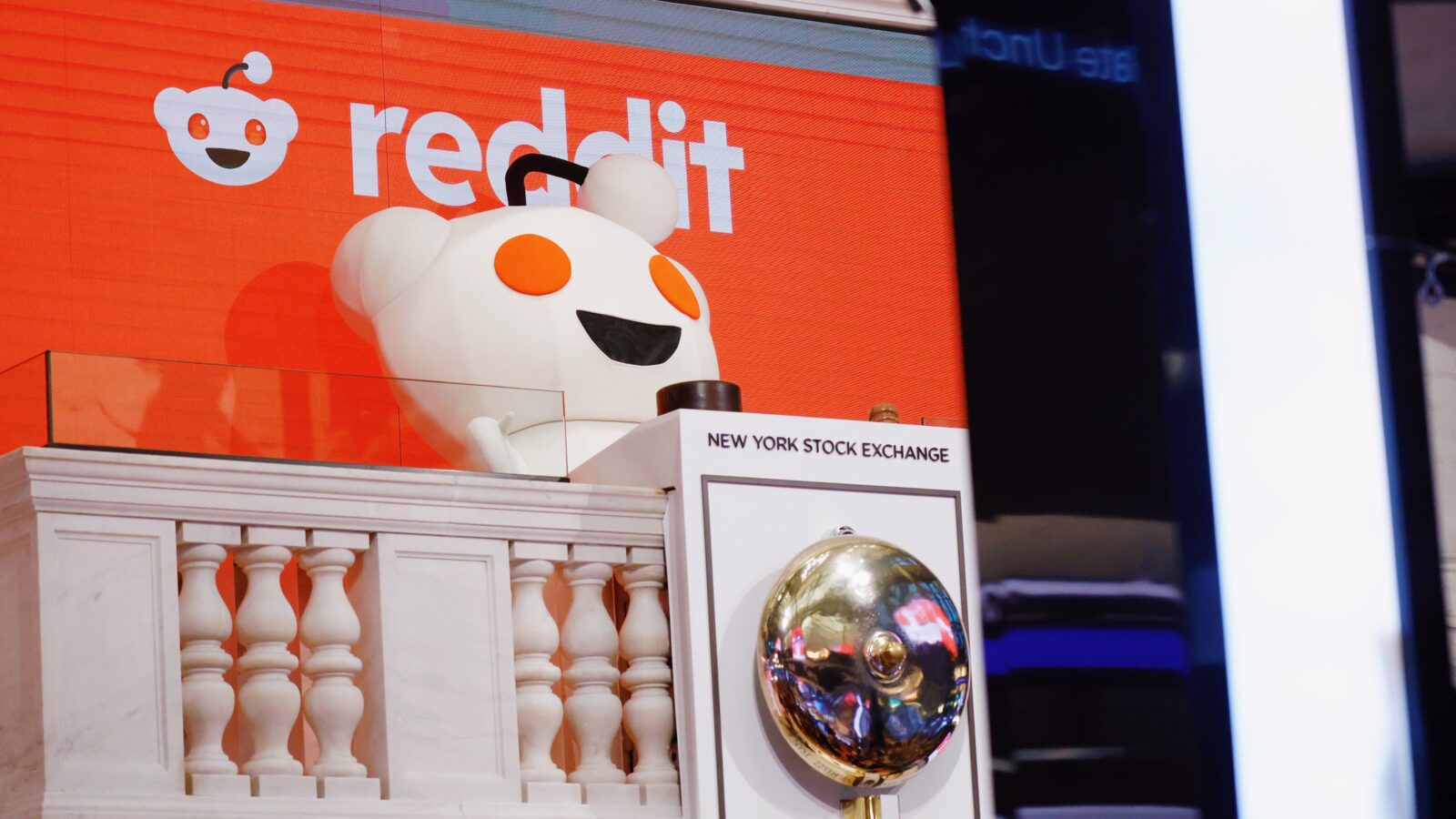
Reddit became the second social media company in the S&P 500 yesterday, joining Meta.
S&P Dow Jones Indices announced on Thursday that Reddit would replace AvalonBay Communities, a real estate investment trust being acquired by fellow S&P member Equity Residential.
Investors initially upvoted Reddit’s stock ahead of the social platform joining the S&P 500. But sentiment switched not long afterward as concerns mounted about the company and its little alien mascot Snoo’s ability to perform in the big leagues.
Adding ‘Reddit’ to Every Google Search
Reddit has been the so-called “front page of the internet” since 2005, but it became more than a platform for perusing memes in the past couple of years. As companies tried to make their AI chatbots sound more human, Reddit posts, from users DoorDashing Dunkin’ to their wife’s workplace on r/CasualConversation to those having a ghost hitch a ride with them on r/Paranormal, have become a blueprint for the human experience.
And unlike some other sites, AI’s scraping happened with Reddit’s permission:
- Reddit got cozy with AI in 2024, striking lucrative deals with both Google and OpenAI to train their AI models on r/creepypasta posts. Those deals padded Reddit’s earnings, which are mainly fueled by ads. The social platform at the end of July reported the eighth straight quarter of revenue rising more than 60%, led by its ad biz. Its “Other revenue” category, which includes data-licensing deals, grew 24%.
- But now investors are afraid AI will do more harm to Reddit’s bottom line than good. While reporting its second-quarter performance, Reddit called search referrals “choppy.” CEO Steve Huffman pointed to Google’s AI overviews as pulling traffic away from Reddit’s site. The Wall Street Journal reported last month that Reddit could be considering ending its $60 million Google deal.
Reddit Stories or AI Summaries? Reddit has always struggled to keep its content on its site, where it can bring in ad dollars, as users repeat its posts word-for-word on TikTok or upload screenshots of its posts to Instagram. Google’s AI overviews are the latest example of that problem. Blocking AI chatbots, like publications including The New York Times and Reuters have done, could either keep more users on Reddit or just diminish the posts’ visibility and drive people to other sources.
The ETF Searching for Alpha Without the Male
There’s a not-so-secret way one exchange-traded fund is handily outperforming the S&P 500 this year: Put the money on women.
The Hypatia Women CEO ETF (WCEO) was up 21% year to date as of market close Friday, compared with under 14% for the S&P 500. The fund’s methodology is to invest in big public companies led by women, and that has clearly paid off, at least in its relatively short history. The fund recently reached two milestones: It just cleared $10 million in assets; and it now has a three-year track record. “We’re now actually getting many independent advisors interested in this thematic, which as far as we know is the only financial product in the world that targets the performance of female CEOs,” said Patricia Lizarraga, managing partner of Hypatia Capital.
XX Returns
The actively managed fund, which represents about $11 million, appears to be the only US ETF with a focus on women-led companies. Hypatia’s thesis is that such businesses have a greater likelihood of outperforming, as it’s no accident when women are picked to lead them. “For women in today’s corporate America, it’s harder for them to get to the top,” Lizarraga said. “It’s that additional challenge, their resilience and the fact that boards have a fiduciary duty to pick the best person to lead the organization … Those facts are what lead to our outperformance.”
While the fund is ahead of the S&P 500 this year, it slightly lags its benchmark, the S&P SmallCap 600 Index, which has returned 23% year to date. A lot of investors view it as a thematic fund more than anything, Lizarraga said. Its top holdings include several oil and gas companies, as well as International Seaways. It also has significant allocations to Franklin Resources, Voya Financial and other firms in asset management and insurance. “We’re [providing] diversification away from the Magnificent 7, and that has helped in the performance,” Lizarraga said. Still, the fund’s software-company exposure hurt it in the second quarter (women-led tech companies are more often on the software than hardware side, she noted). “But we’ve seen that turn around … The death of software was overstated.”
There are several other funds in the US with wider investment strategies supporting corporate gender diversity or women’s empowerment:
- The $337 million State Street SPDR MSCI USA Gender Diversity ETF (SHE), which invests in companies committed to diversity across their organizations, has returned 22% year to date.
- The $59 million Impact Shares Women’s Empowerment ETF (WOMN), which focuses on companies with policies supporting gender equality, has returned 10%.
- The $659 million Impax Global Women’s Leadership Fund (PXWIX), which is a mutual fund that allocates to companies that seek to advance gender diversity and equality, is up 15%.
She’s All That: Distribution has been a challenge for WCEO — it’s not even available through Ellevest, which caters to women. Having three years of returns to show could help change that, Lizarraga said. “We want to engage with more financial advisors and more RIAs that will do the due diligence to see how robust our processes are and how our investment thesis will outperform.”
The Insurance Conversations Younger Clients Need to Have

Everyone hates paying for insurance until they actually need it.
That’s true for health and auto policies, but the picture for life insurance is more nuanced. Increasingly, these products are getting a seat at the table during client meetings, and some advisors see insurance as core to their process. Others agree that insurance can play an important role, but it’s crucial for policy purchasers to know exactly what kind of protection they’re getting and why. To turn the old adage on its head, life insurance policies should be bought, not sold.
“I’ve seen the devastating impact on families when the primary breadwinner passes away without life insurance,” said Jeffrey Walters, founder of Advisia Financial Planning. “In many cases a cheap term insurance policy could have been purchased while the breadwinner was healthy, but was not, due to unawareness or inertia.”
Real Insurance Talk
Sure, insurance is important, but clients still need to be wary. Asking a commission-based insurance agent what type of insurance to buy is like asking a jeweler what type of stone to get in a necklace: The financial incentives are strongly in favor of an expensive, complicated policy. Fortunately, term life policies for healthy people under 50 are often affordable, offering protection from the worst-case scenario described above.
“Where and from whom someone learns about insurance products is often more predictive of what they end up owning than what actually fits their needs,” said Skee Orr, co-founder of Kinetic Wealth. That’s unfortunate, advisors agreed, but people who avoid the conversation entirely can end up underinsured. The best outcomes begin with fiduciary financial planning that clearly defines what protection a family needs. From there, advisors can recommend working with independent brokers who can shop the market for fitting products.
Another consideration is disability, according to Michelle Crumm, financial planner at Belle Eve Financial. “For younger clients, they are statistically more likely to become disabled during working years than to die prematurely,” she said. “A high-quality, long-term disability policy that covers a client’s own occupation can be one of the most important protections in a financial plan.”
Randy Bruns, founder of Model Wealth, agreed. “Nearly every retirement plan depends upon one enormous assumption: that you’ll remain able to work and earn an income,” he said. “An accident or serious illness can change that instantly.”
When Insurance Isn’t Needed. “A two-income family where either single income is enough to support the family may not need insurance at all,” said John Bernstein, founder of Bernstein Financial Advisory. “Contrast that against a single-income family where the spouse is a stay-at-home parent caring for children.”
At minimum, that family should carry enough insurance to pay off the mortgage and cover childcare costs until the surviving spouse can find adequate employment. If the preference is for the surviving spouse to remain at home, the policy has to be much larger to replace lost income indefinitely.

What Could Financial Planning Look Like in 20 Years? Altruist CEO Jason Wenk joins Sean Allocca and John Manganaro to walk through how the company’s Hazel AI platform can build full financial, tax, and estate plans with no data entry required, and what the human advisor will still cover in the long-term future. Plus: why one Hazel release briefly sent wealth management stocks tumbling.
 Listen to this week’s episode here.
Edited by Sean Allocca. Written by Emile Hallez, Griffin Kelly, John Manganaro, Lilly Riddle, and Quinn Waller.
Advisor Upside is a publication of The Daily Upside. For any questions or comments, feel free to contact us at advisor@thedailyupside.com.