Oil Prices Slide amid Fresh Hope for US-Iran Peace Deal
Oil prices may eventually reach $200 a barrel unless a supply crisis sparked by the Iran War is resolved, experts warn.
Sign up for smart news, insights, and analysis on the biggest financial stories of the day.

Like one family destined for Acadia National Park and another bound for Yosemite, consumers and financial markets entered the Memorial Day weekend heading in opposite directions. A reading of consumer sentiment tracked by the University of Michigan fell to an all-time low on Friday, while the Dow Jones Industrial Average closed at a record high.
This morning, at least, there’s enough cautious optimism to fuel a road trip for everyone. The US and Iran signaled over the weekend that peace talks have yielded a potential deal, something that would ease the inflationary shocks unleashed by a nearly three-month-old conflict. International oil benchmark Brent crude is down 5.8% this morning to $97.47 per barrel, on track for its lowest close in a month.
Under Pressure
President Donald Trump said Saturday that the US, Iran and other countries have “largely negotiated” a memorandum of understanding for a Persian Gulf peace deal that would reopen the Strait of Hormuz. While it’s not the first time the White House has suggested the conflict is near a resolution, Iran’s semi-official Tasnim news agency confirmed the talks on Sunday while warning that sticking points, like the unfreezing of Iranian assets, could block a deal.
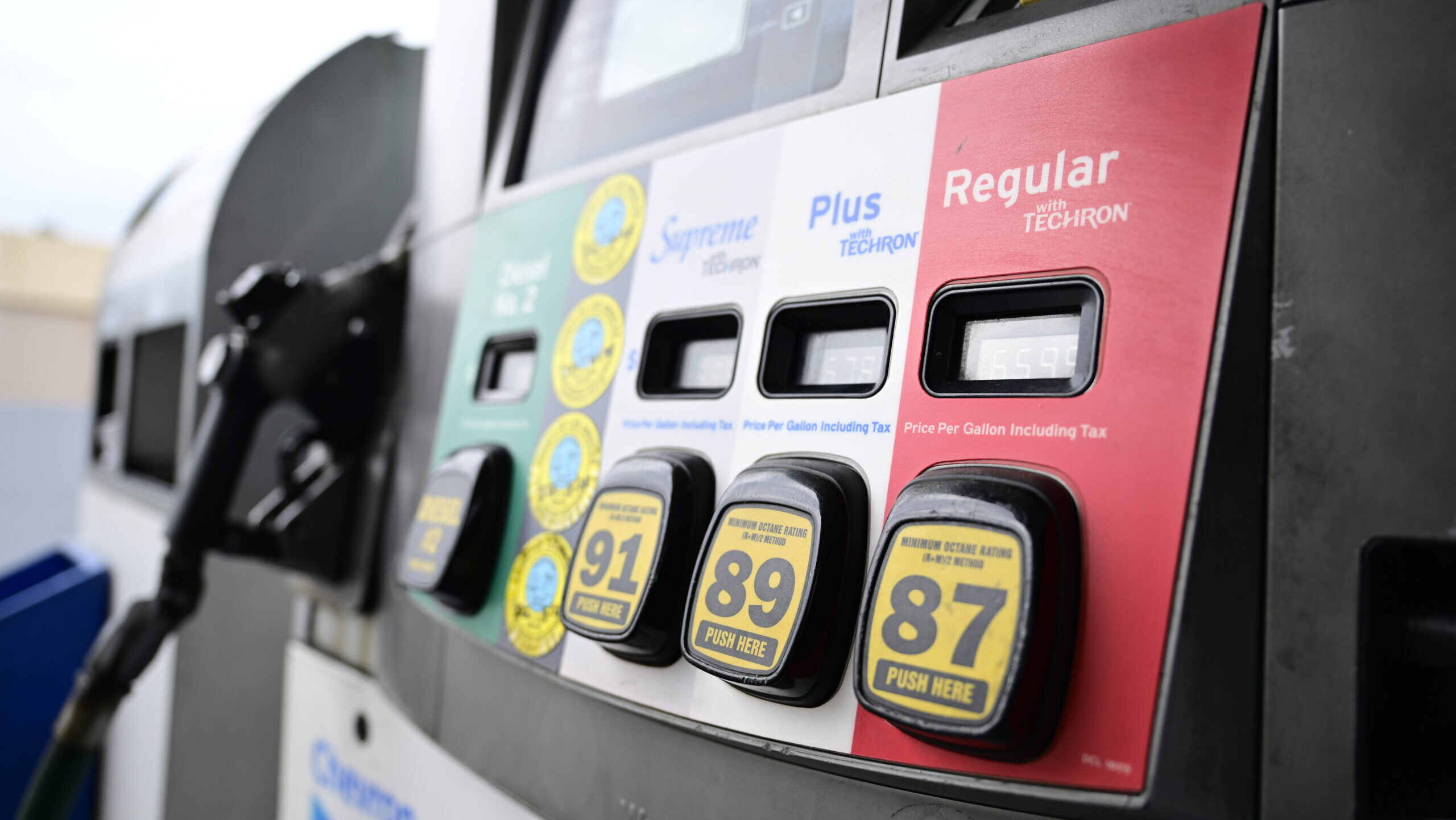
Overall, it’s a breakthrough at a moment when experts warn energy markets and consumers are near their breaking points. Fatih Birol, the head of the International Energy Agency, said last week that oil markets could hit a perilous “red zone” by July or August if the two sides fail to make progress on reopening the Strait, where a quarter of the world’s seaborne oil trade flows. Fourteen million barrels of oil per day have disappeared from the market since the conflict began on February 28, he said, and production won’t recover for at least a year. Wood Mackenzie analysts warned of $200-a-barrel oil by year’s end. Meanwhile, US consumers, now paying an average of $4.51 per gallon to fill up their gas tank, “appear worried that inflation will increase and proliferate beyond fuel prices, even in the long run,” said Joanne Hsu, the director of the University of Michigan Survey. The prospect of a deal has meant a good day for global stocks:
- With crude oil prices falling, import-reliant Asian markets were in full swing on Monday. Japan’s Nikkei rose 2.9% and topped 65,000 for the first time.
- Futures contracts on the S&P 500, which is currently on an eight-week winning streak, were up 0.9% early this morning.
Headlines vs. Barrels: A good rule of thumb: Don’t count on a deal until there is one. Last week, Ole Hansen, the head of commodities at investment bank Saxo, cautioned against “reacting to diplomacy headlines” without considering other factors. “Unless those headlines translate into a meaningful increase in physical flows, price weakness risks will continue to be driven more by expectations than fundamentals. Futures trade on headlines; physical markets continue to trade on barrels.”
Recent News
-

Photo illustration by Connor Lin / The Daily Upside